Why contract support matters for every municipality, big or small
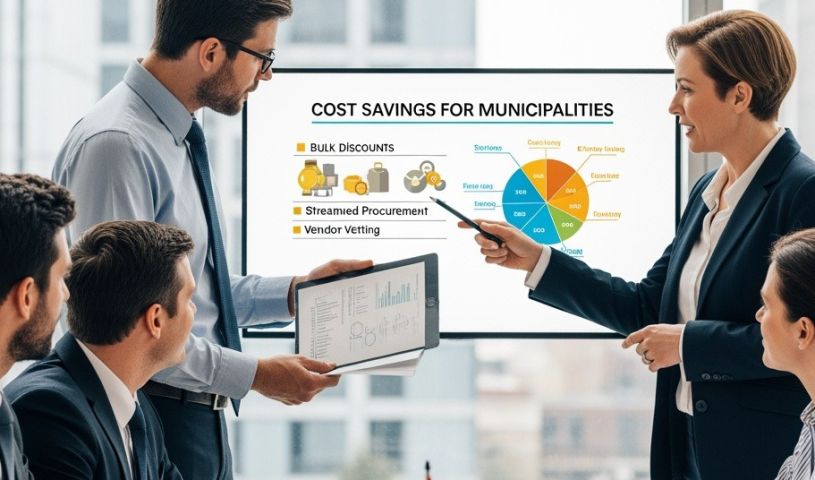 Group purchasing organizations (GPOs) are widely known for helping municipalities save money through volume discounts. But an often overlooked value lies in something just as impactful: contract support. Photo: Kinetic GPO
When a streetlight goes out, replacing it should be a simple task. But for many municipalities across Canada, getting a contractor to return their call much less resolve the issue quickly can feel nearly impossible.
Procurement challenges like these aren’t rare. They’re daily realities that impact public safety, service delivery, and the responsible use of taxpayer dollars. Across the country, municipalities are increasingly asking how they can stretch every tax dollar further while still maintaining reliable and transparent service for residents.
Group purchasing organizations (GPOs) are widely known for helping municipalities save money through volume discounts. But an often overlooked value lies in something just as impactful: contract support.

Beyond buying power, a GPO can help manage suppliers, ensure compliance, navigate disputes, and step in when issues arise before they become costly and disruptive.
The High Stakes of Going It Alone
This type of contract support is key, especially when municipalities lack the personnel, leverage, time, or legal assistance to resolve contract issues quickly. Without the support a GPO offers, the consequences can be significant:
Losing access to goods or services while transitioning to a new supplier, a process that can take months.
Burning through taxpayer dollars by re-running competitions, paying legal fees, or resorting to emergency procurement at higher prices.
Project delays that can jeopardize municipal mandates.
Risking compliance violations that could lead to challenges or legal action.

Meanwhile, rising costs, budget constraints, and increasing taxes mean procurement mistakes can quickly become liabilities.
How GPOs Can Help
For municipalities of all sizes, working with a GPO can be the difference between reactive procurement and strategic procurement.
Stronger, more responsive supplier relationships – GPOs like Kinetic have a supplier engagement team that meets regularly with suppliers. This goes beyond engaging with the sales teams to include senior executives when necessary. These relationships create real leverage. If something goes wrong, a municipality isn’t left to chase down a representative. The GPO can intervene immediately, backed by a large network of members whose collective purchasing power ensures suppliers pay attention. “A small town becomes part of a program that includes cities the size of Toronto,” said Carl MacDonald, vice president of contracting and compliance at Kinetic GPO. “That changes everything.”
Strengthening procurement teams – One common concern among municipalities is that using a GPO may render staff redundant, but the opposite is true. Routine purchases like chairs, laptops, and office supplies are removed from the procurement team’s responsibilities, allowing them to focus on complex, high-impact projects like infrastructure planning. Given today’s shrinking workforce and wave of retirements, this additional support is invaluable.
Faster solutions – Urgent situations from floods to infrastructure failures often require fast procurement solutions. While municipalities can bypass rules in crisis situations, they lose all leverage when they do so. A GPO offers pre-competed contracts with better pricing, ready to activate when needed.
Custom competitions and flexibility – If a municipality has a unique need, a GPO can run a custom request for standing offer (RFSO). This is not uncommon for Kinetic, MacDonald said. For example, he points to an Ontario county’s recent interest in EV charging stations, which led Kinetic to develop a full competition that now benefits many members, even those not originally part of the conversation. This kind of responsiveness ensures that emerging trends and technologies are addressed quickly and strategically.
Compliance without the headache – Compliance is one of the most complex and high-risk areas of procurement. Many municipal employees who manage procurement do so on top of their primary responsibilities and without the benefit of comprehensive training or a dedicated legal team. A GPO brings expertise, structure, and stringent competitive processes. “Kinetic’s process is probably stricter than any other GPO,” Macdonald said, “We’ve never been challenged on a competition or award because we don’t cut corners.” GPOs also simplify requirements around competitive bidding, said LouAnn Birkett, Kinetic’s senior supply chain advisor – contracting. “A member who needs three quotes is provided with dozens of qualified responses. And critically, trade agreements allow municipalities to rely fully on a GPO’s competitive process.”
A Strategic Partnership
“Members often describe Kinetic as an extension of their own procurement team,” MacDonald said. “That’s a sentiment we take seriously and view as an honor.”
Birkett adds that Kinetic builds similarly strong relationships with vendors. “We are genuinely invested in their success, which is why we are constantly looking for ways to improve the experience for both vendors and members,” she said. “It’s not just about contracts. It’s about people, processes, and results.”
For municipalities grappling with rising costs, shrinking teams, and increasing complexity, the takeaway is clear: a GPO is far more than a buying tool. With dedicated support, proactive contract management, and a commitment to strategic outcomes, a GPO like Kinetic acts as a trusted partner that helps municipalities save time, reduce risk, and achieve more with every dollar.
Maureen Sullivan is a procurement fairness consultant who was named one of the top 100 women in the Canadian supply chain sector by Supply Chain Canada.