Record-setting ROMA conference highlights pressures, opportunities in rural Ontario
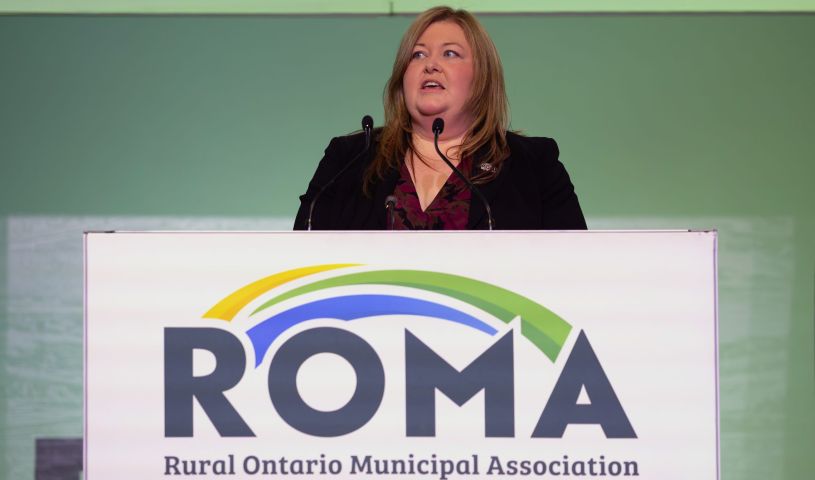 ROMA chair Christa Lowry said the record-setting turnout to this year’s conference reflects a growing desire among rural communities to collaborate and tackle shared challenges. Photo: Association of Municipalities of Ontario
The Rural Ontario Municipal Association (ROMA) conference set new participation records this year. The turnout, according to ROMA chair Christa Lowry, reflects a growing desire among rural communities to collaborate and tackle shared challenges.
ROMA 2026, held Jan. 18-20, drew 2,300 delegates – a 20 per cent increase from previous years. The event also set a new high for municipal participation, with 316 of Ontario’s 444 municipalities represented, accounting for more than 70 per cent of the province.
Lowry – who is also the mayor of Mississippi Mills – said every major metric reached an all‑time high, from workshop attendance and plenary events to the number of government delegations offered.
“It was hugely successful,” Lowry said. “It tells me rural communities want to come together.”
Value of Coming Together
Lowry said the surge in participation reflects a growing desire among rural leaders to learn from one another and share experiences unique to small, remote, or northern communities.
Some municipalities have already developed solutions others can learn from, she added. It’s the conversations attendees can have with each other – and with the experts that ROMA brings in – that make the conference so valuable.
The appetite for engagement apparently extended to meetings with provincial officials, as well. Lowry said 250 municipalities took the opportunity to meet with provincial officials, resulting in 651 delegations with cabinet ministers, associate ministers, and parliamentary assistants – 65 more than any previous year.
“Rural politics can be very isolating,” she said. “Coming together with colleagues who understand the pressures of being small and rural helps you realize you’re not alone. We’re all dealing with fairly similar issues.”
Growing Focus on Rural, Northern Issues
The surge in participation comes as national municipal leaders signal a renewed emphasis on rural and northern communities.
Ottawa Coun. Tim Tierney, currently the first vice-president of the Federation of Canadian Municipalities (FCM), recently said in an interview that he believes there must be an even greater focus on rural and northern communities – an assessment Lowry strongly agrees with.
Lowry pointed to major economic opportunities – from agriculture to the Ring of Fire – as well as the local development work happening in small communities across Ontario as advantages of that focus. She credited Rural Affairs Minister Lisa Thompson for helping shine a brighter spotlight on rural success stories.
She also applauded FCM’s perspective, saying she also met with Tierney at the ROMA conference, introducing him to many of her board members, and coming away “really encouraged” by the focus he and FCM have been taking. There are, Lowry said, numerous opportunities in rural communities.
“Well, maybe it’s our time,” Lowry said. “The growth that many rural and northern communities are experiencing is a signal that what happens in rural communities really matters. Being intentional about what happens in our rural communities is more important than ever.”
Shared Challenges, Different Scale
While rural communities differ in size and geography, Lowry said the issues they face mirror those in major cities – just on a different scale.
One of the most pressing topics at this year’s conference was homelessness, following the release of updated data from the Association of Municipalities of Ontario (AMO). The numbers, she said, were alarming.
AMO’s 2025 report – Municipalities Under Pressure: The Human and Financial Cost of Ontario’s Homelessness Crisis – shows that approximately 85,000 Ontarians are currently homeless. The data also shows homelessness growing faster in rural and northern Ontario than anywhere else in the province.
The AMO study shows a 30 per cent increase in homelessness in rural areas and 37 per cent in the north last year alone. Although only five per cent of Ontarians live in the north, the region accounts for 10 per cent of the province’s homelessness.
“Rural homelessness looks different than it might in Toronto or Vancouver. It’s often hidden – people couch surfing or sleeping in their cars. There’s just not the same network of support,” Lowry said. “The need for support, wraparound services, and deeply affordable housing is just as real – if not more real – in rural and northern Ontario.”
Infrastructure Pressures Mounting
Infrastructure remains a perennial concern, intensified by both growth and aging assets. Lowry noted that rural Ontario is home to 17 per cent of the population but must maintain over 30 per cent of the province’s roads, bridges, and core infrastructure.
These issues dominated discussions both on the main stage and in municipal delegations with provincial officials.
“Fundamentally, there is a problem with how we pay for these things,” Lowry said. “We have a lot of area and not a lot of density. Clearing the backlog of infrastructure challenges is always top of mind.”
Health Care and the Limits of Property Tax
Health care also emerged as a major theme – one Lowry emphasized is not strictly rural, nor strictly municipal, but unavoidable for communities across Ontario.
The property tax base, Lowry said, was never intended to pay for health care. That said, many smaller communities continue to offer financial incentives to attract doctors – a practice Deputy Premier and Minister of Health Sylvia Jones has recently urged municipalities to step back from.
But Lowry said the reality on the ground is complicated.
ROMA has never taken a position on physician recruitment one way or the other. That said, they also understand there are communities who can help and want to help, and then there are the communities who cannot.
Lowry described it as “a bit of a Hunger Games situation,” noting that this is one reason ROMA is updating its 2024 rural health care paper, which included 22 recommendations for the province. The update reflects major changes in the health care landscape, including Ontario’s Primary Care Action Plan and recent shifts in public health.
“We’re eager to support Minister Jones in any way we can,” Lowry said. “We want to ensure rural Ontario is part of any plans. There are always unintended consequences when new programs roll out, and we’ve been having ongoing dialogue with the minister.”
Persistence Pays Off
Rural municipal leaders are facing mounting pressures, but the path forward lies in persistence, collaboration, and refusing to give up, Lowry said.
The emotional and practical strain on rural councils is real, she added, with local leaders knowing what their communities need but often lacking the tools, authority, or funding to deliver solutions at the scale required.
Lowry said that despite the frustrations, optimism remains a defining trait among rural elected officials. Many people enter municipal politics out of a deep commitment to their communities, she noted, and that sense of purpose fuels their determination.
Despite the obstacles, Lowry believes rural Ontario is making progress.
“It’s about showing up,” Lowry said. “Showing up, asking the hard questions, hearing hard feedback, and coming back again. None of these challenges will be solved overnight, but you keep showing up with your full heart and the intention of doing what’s best for rural Ontario.” MW
✯ Municipal World Executive and Essentials Plus Members: You might also be interested Paul Lang and Isabelle Godin’s article: Building employee loyalty in rural municipalities.
Sean Meyer is digital content editor for Municipal World.
Related resource materials: