FCM lauds bail reform, long-term funding for affordability
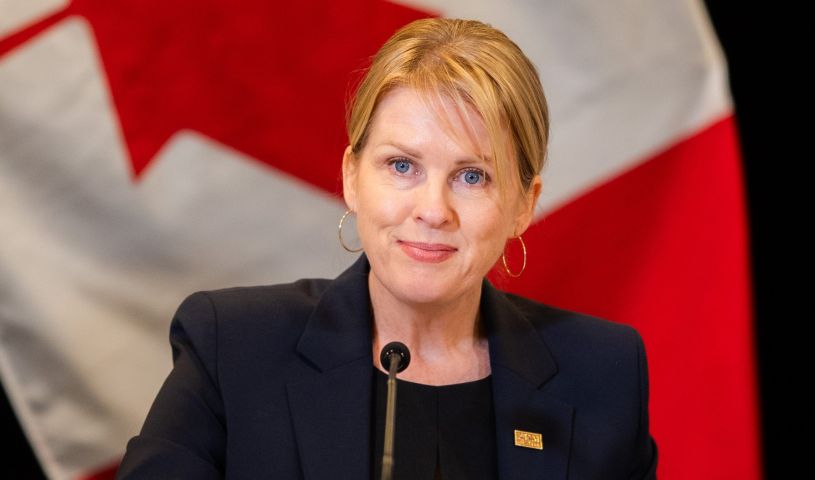 FCM President Rebecca Bligh is lauding recent moves by the federal government on bail reform and sustained, long‑term funding to tackle housing affordability. Photo: FCM
Bail reform and housing affordability rank among Canada’s top municipal priorities: bail reform is critical for public safety and policing costs, while affordability remains the leading concern for residents.
The Federation of Canadian Municipalities (FCM) has repeatedly urged federal, provincial, and territorial governments to help municipal leaders address these escalating issues.
The federal government now appears to be listening.
In October, Ottawa introduced new bail reform legislation, Bill C-14, the Bail and Sentencing Reform Act. FCM has said this legislation marks progress on a longstanding municipal concern.
Last month, the federal budget was unveiled, with FCM saying Ottawa’s plan acknowledges the importance of local infrastructure in advancing Canada’s housing, trade diversification, and economic goals. But without a sustained, long-term plan, FCM worries the federal government’s ambition won’t match the scale or urgency of the challenge.
Signs of Bail Reform Progress
Rebecca Bligh is the president of FCM and a City of Vancouver councillor. She said municipalities welcome federal commitments to bail reform but warned deeper systemic changes are still needed to ease the burden on local governments.
While supportive of measures targeting violent crime and chronic re‑offenders, Bligh emphasized that non‑violent repeat offences also pose significant challenges. In many communities, she said, a small number of individuals are responsible for repeated incidents such as shoplifting, vandalism, and street disorder.
Bligh noted that the current “catch and release” approach has placed an unsustainable strain on local governments. The costs to municipalities in managing the reactive approach, she added, is creating an unsustainable burden on police budgets that are shouldered by municipalities.
Bligh called for federal and provincial governments to work together on sustainable funding and holistic solutions. This would ensure municipalities are not left to shoulder the costs of systemic gaps.
“We know that there are complex challenges that are driving a lot of this community disruption in criminal activity,” Bligh said. “Seeing the intersection of unhoused, poverty, mental health, and addiction playing out on our streets means many folks are falling through the cracks that could otherwise be supported in other ways.”
Crime Isn’t Just a Big-City Problem
Bligh stressed that repeat offending and community disruption are no longer confined to Canada’s largest urban centres. Smaller municipalities grapple with the same challenges, but often without the necessary resources.
While crime may once have been seen as a big‑city problem, Bligh emphasized that is no longer the case.
Bligh noted that municipalities must intervene early to prevent young people from falling through the cracks. She pointed to youth struggling in traditional education systems, absent parents, and families stretched by multiple jobs as factors that can lead to cycles of crime.
Municipalities, Bligh said, need to address both prevention and enforcement simultaneously.
“We’ve seen this for generations. We’ve got to be able to do all things at once,” she said. “We’re recognizing that, at the end of the day, it’s incredibly frustrating for municipalities, and in funding police budgets, to be seeing this repeat offender trend and not doing anything about it.”
Federal Budget, Infrastructure Needs
Bligh acknowledged progress on bail reform. But said the recent federal budget still lacks a sustainable fiscal plan to support local governments.
Bligh welcomed the federal government’s recognition of municipal infrastructure as central to Canada’s economy, housing, and community resilience. She noted that the 2025 budget included both new investments and repackaged funding streams.
“My first take on seeing the federal budget is it clearly recognizes that municipal infrastructure is key to a strong economy,” Bligh said. “We saw municipal infrastructure identified as a critical part of housing, productivity, trade, and building resilient communities and cities.”
She highlighted the rebranded Canada Community-Building Fund, now part of the Build Community Strong Fund, as a proven model for direct municipal funding. FCM has long argued that predictable, long‑term funding is essential to close Canada’s $250‑billion infrastructure deficit.
Incremental Progress on Fiscal Reform
While acknowledging progress, Bligh emphasized that municipalities still rely on outdated fiscal tools dating back to the late 19th century. She said wholesale reform is needed to modernize municipal revenue frameworks.
She credited supportive federal allies, including ministers with municipal experience – such as former mayors Gregor Robertson and Rebecca Alty – for understanding the strains on local budgets. But she cautioned that one‑year funding fixes are not enough to secure long‑term sustainability.
“We recognize that progress is often incremental in anything we do,” Bligh said. “We’re at a time where we’re looking for wholesale change of a revenue tool that municipalities have had in place since the late 1800s. Changing that will require short‑term, medium‑term, and long‑term goals.”
Recognize the Wins While Pushing Ahead
Bligh said FCM remains focused on long‑term fiscal reform but must also celebrate short‑term victories. She pointed to $12.2 billion in housing‑enabling infrastructure, which requires provincial and territorial matching funds, as a significant step forward.
“It does not take us off our focus long term, but we have to recognize wins when they come in the door,” she said. “We’ve long said that all three orders of government need to be at the table to solve our biggest challenges.”
She expressed optimism that Prime Minister Mark Carney appears to have shifted his approach to engaging provincial governments. This move, she said, is essential to tackling Canada’s housing crisis and infrastructure deficits.
Bligh noted that the federal government’s plans for major nation building projects have downstream impacts on municipalities. While such projects strengthen Canada’s economy and attract global investment, they also increase demands on local infrastructure.
“Any global investment in economic resilience in our country that creates more stability financially across the board … these folks need to go on roads that municipalities manage and are responsible for renewing,” Bligh said. “An asset renewal plan with robust funding in order to be able to plan and forecast how those projects get done needs to happen at the same time as these big, nation-building projects. And that’s what we’re pushing for.”
Stepping Up for Rural, Northern Communities
Bligh expressed concern the needs of rural and northern communities were not broadly reflected in the federal budget. These municipalities, she said, often have smaller tax bases and face unique challenges in accessing funds.
She reiterated FCM’s call for rural‑specific funding streams to ensure equitable development across Canada.
“That lack of dedicated funding, which we’ve been advocating for, is a missed opportunity in our opinion,” Bligh said. “Especially when it comes to what we’ve been talking about, that trade diversification – that strengthening of Canada’s economy – happens through rural and northern communities.” MW
✯ Municipal World Executive and Essentials Plus Members: You might also be interested in the Dwayne Torrey and Kay Penn’s article: Standards and codes can help secure the resiliency of Canada’s vulnerable infrastructure.
Sean Meyer is digital content editor for Municipal World.
Related resource materials: