FCM VP reflects on tumultuous 2025, rising municipal influence
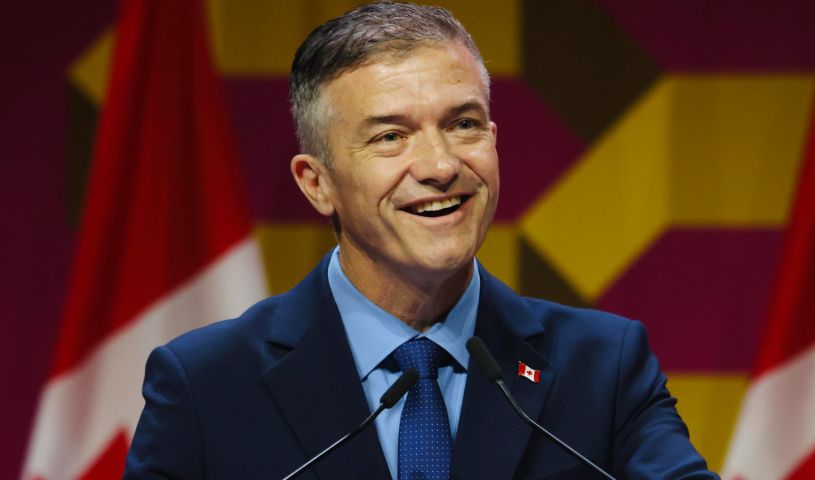 Ottawa City Coun. Tim Tierney, who serves as first vice-president of the Federation of Canadian Municipalities, said 2025 was a difficult year for local governments. He added that many of the challenges municipalities faced in 2025 will continue to pose obstacles in 2026. Photo: Tim Tierney
It’s probably an understatement to say 2025 was a busy year for the Federation of Canadian Municipalities (FCM). Not only did FCM delegations travel across the country – and into the United States – to address the impacts of U.S. President Donald Trump’s trade war, but they also had many conversations with Canadians on topics ranging from housing affordability to public safety.
Ottawa City Coun. Tim Tierney was part of many of those delegations. Tierney, FCM’s first vice-president, said 2025 was one of the most consequential years for municipalities in recent memory, driven by cross‑border trade tensions, economic uncertainty, and unprecedented national attention on local governments.
“It’s been a tumultuous year. Lots of activity,” Tierney said. “Municipalities have really had a great role in the last year, and it’s probably the only level of government that’s been stable across the board.”
Strengthening Canada-U.S. Relations
Tierney, who is set to become the first FCM president from Ottawa in 87 years when he assumes the role later this year, said the organization’s advocacy has never been more critical. He pointed to ongoing U.S. tariff disputes as a major focus of FCM’s international work.
Eagerly championing the relationships FCM strengthened in the U.S. over the past year, Tierney said he has enjoyed the opportunity to speak with delegates from the National League of Cities (NLC) and focus on strengthening the bonds between Canadian and U.S. municipalities.
“We’ve been down to Salt Lake City, Philadelphia, Tampa – meeting with Democratic and Republican mayors alike,” he said. “They all agree they need Canada, and they understand their own constituents are being hurt by these tariffs. Being a non-partisan body, we still work with everybody. Where will the future go? We don’t know, but this year we’ve seen it all.”
Tierney said FCM will continue strengthening ties with the NLC, FCM’s American counterpart that represents more than 3,000 U.S. municipalities.
A key goal of the coming year will be a formalizing of co-operation.
“We’re looking at establishing a memorandum of understanding with our American counterparts,” he said. “We want to keep the tariff discussion going and ensure municipalities on both sides of the border are heard.”
Affordability, Safety Today’s Key Concerns
When it comes to domestic concerns, Tierney said affordability – particularly around housing – remains the dominant issue for municipalities.
While federal housing dollars have begun flowing, he emphasized that funding for the infrastructure required to support new development is equally essential. Tierney said municipalities welcome getting funding for housing, but if those same homes can’t connect to sewer or water, the cost falls on the municipal taxpayer.
He is quick to add there now seems to be recognition from the Carney government and the provinces that fixing the municipal infrastructure gap is the key to creating more housing, not just the construction of the units themselves.
Tierney pointed to Calgary’s repeated water crises as a stark example of why infrastructure investment must accompany housing commitments. He also has experience with the demands of water infrastructure, having learned that lesson years earlier after a major waterline failure in the Ottawa suburb of Barrhaven.
“We twinned our lines to ensure redundancy, and that’s what municipalities have to do now,” he said. “You can put as many homes as you want on a waterline, but when it’s gone, it’s gone.”
Public safety also emerged as a top concern across the country, even as crime statistics in many cities show declines. The key safety concern for many local leaders – which has been the focal point of numerous conversations – is the demand for bail reform.
Tierney said bail reform has become a rare point of consensus among premiers of all political stripes. It’s an alignment Tierney said he’s never seen in 16 years with FCM.
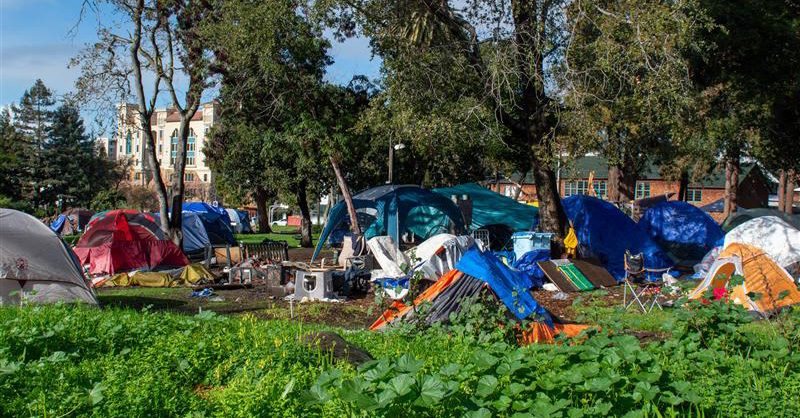
Tierney said the disconnect between public perception and data is driven in part by visible social disorder and pressures on local police.
“People may not be committing more violent crime, but there are far more individuals on the streets struggling with addiction and mental health,” he said. “That still consumes police resources, and residents feel it every day.”
Looking Ahead to a New Year
As municipalities prepare for another year of economic uncertainty, infrastructure strain, and affordability pressures, Tierney said he believes there will be an even greater demand for more co-ordinated national advocacy – with a renewed focus on rural and northern communities.
“Ironically, nothing we talked about in 2025 is going away,” Tierney said. “But there are new dynamics emerging that will shape how FCM approaches the year ahead.”
One of the biggest shifts, Tierney said, is the federal government’s decision to change the timing of budget tabling. This, he explained, will force FCM to rethink its long‑standing advocacy calendar.
This new reality will change how FCM builds its advocacy efforts, which traditionally happen toward the end of the year. Even so, he was quick to add there is a commitment by FCM to do the necessary reorganizing to ensure municipal voices land at the right moment.
FCM’s top priorities – infrastructure, housing and affordability, and community safety – remain unchanged. But, Tierney said 2026 will bring a sharper emphasis on rural and northern communities, which he argues are central to Canada’s economic future.
“Rural municipalities are one of the biggest drivers of cross‑border and interprovincial trade,” he said. “Even though I represent an urban ward, I grew up in the country – I know how important these communities are.”
He said rural Canada will be “front and centre” at FCM’s 2026 annual general meeting in Edmonton. Whether it’s farming, forestry, the Ring of Fire, or mining critical minerals, none of these activities occur in major centres.
Rural and remote communities are where the resources are, he said, and is why those communities will be “the quarterbacks for 2026.”
Personal Focus for 2026
Tierney also reflected on what it means to step into the FCM presidency after 16 years with the organization. He said the role will amplify his ability to advocate directly with federal leaders – especially given that he lives in the nation’s capital.
“MPPs should probably have a bit of fear because I live here. I see them at every restaurant … or wherever I’m going,” he said. “Every time I run into them, it’ll be like, ‘Oh, minister. Oh, shadow minister.’ I will make use of my region to be able to even press harder from an advocacy point of view.”
Despite the increased workload, Tierney said he feels prepared.
Tierney is quick to point out his top job is representing his municipality. But, that said, he is quick to state he is “pretty well balanced,” and he wants to make sure that Ottawa – along with the other 2,000-plus member municipalities across the country – benefit from his advocacy efforts.
That raises the question of how Tierney is able to find the much-lauded – and often fallen short of for politicians – work-life balance.
Tierney credits his wife, Jenny, and their adult children for making things “a lot easier” than they might otherwise be.
Time management is certainly the biggest component of his work-life balance. He’s not taking the added FCM role on for the money (there’s no extra money in this, he jokes) but, rather, because he truly believes he has a role to play in making a difference for Canadian municipalities.
It’s why he continues to work so hard for not just his ward but also for the city, and for municipalities across the country.
“I love it. I do. People have asked me time and again to run at partisan levels, provincially and federally, and I don’t have an interest,” he said. “There’s nothing I love more than learning something new about every municipality I visit. I can’t wait to do even more of that in 2026.” MW
✯ Municipal World Executive and Essentials Plus Members: You might also be interested in Dr. Enid Slack’s article: Are Canadian cities fiscally sustainable?
Sean Meyer is digital content editor for Municipal World.
Related resource materials: